

Integrated Infrastructure for Modern Buildings
Behind every safe, comfortable, and efficient building lies a complex network of electro-mechanical systems that work seamlessly together. Electrical power distribution, lighting, plumbing, drainage, and mechanical systems form the nervous system and circulatory system of any structure—enabling functionality, ensuring safety, and supporting the activities of occupants. These systems are the invisible infrastructure that makes modern life possible, delivering power when and where it is needed, providing clean water for drinking and sanitation, removing waste safely, and creating environments where people can live, work, and thrive. At Arabian Strengthening & Protection Co., we deliver comprehensive MEP solutions that integrate these critical systems into a cohesive, reliable whole. From initial design through installation, testing, and commissioning, our team ensures that every electrical, mechanical, and plumbing component is properly coordinated, efficiently installed, and built to perform for decades.
Electrical Systems
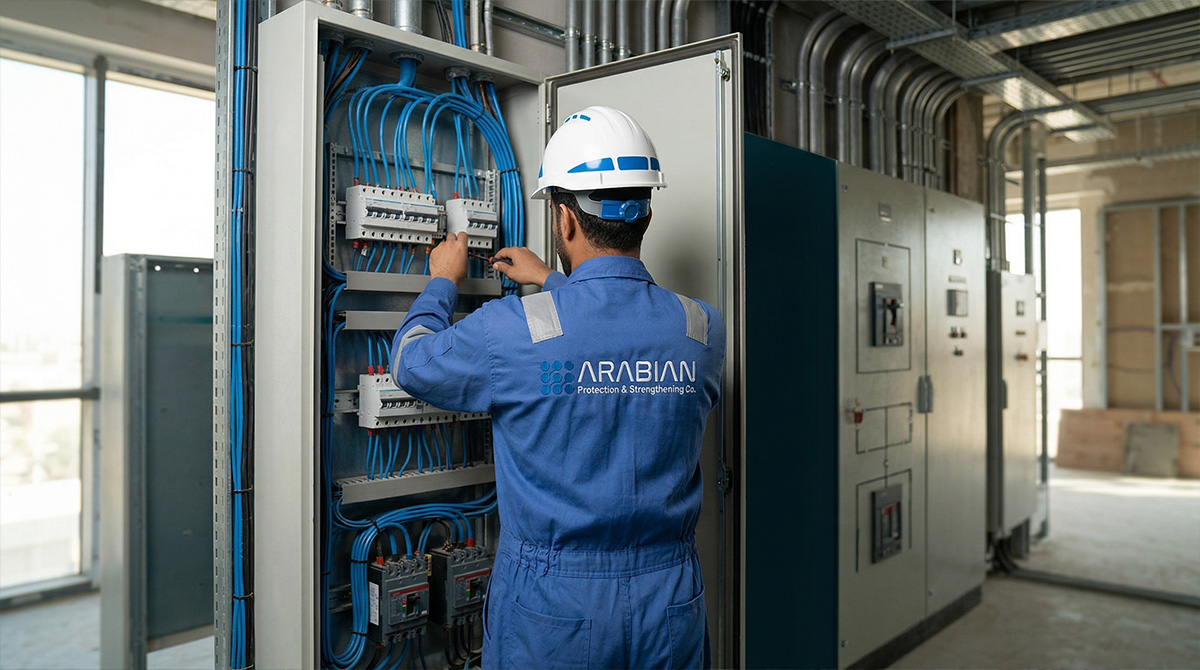
Electrical systems are the lifeblood of any building, providing the power that lights spaces, runs equipment, and enables every function within the facility. Our electrical services encompass power distribution with main switchgear, distribution panels, and feeders that safely deliver power throughout the facility. We design and install lighting systems for interior spaces, exterior security, and emergency egress, with lighting controls that optimize energy use through scheduling and occupancy sensing. We provide emergency power systems including generators with automatic transfer switches and uninterruptible power supplies for sensitive equipment. Our low current systems include structured cabling for data networks, CCTV for security surveillance, access control for secure entry, and public address systems for communication. We also install lightning protection systems that safeguard structures from lightning strikes and energy management systems that provide the intelligence to optimize electrical consumption.
Plumbing Systems
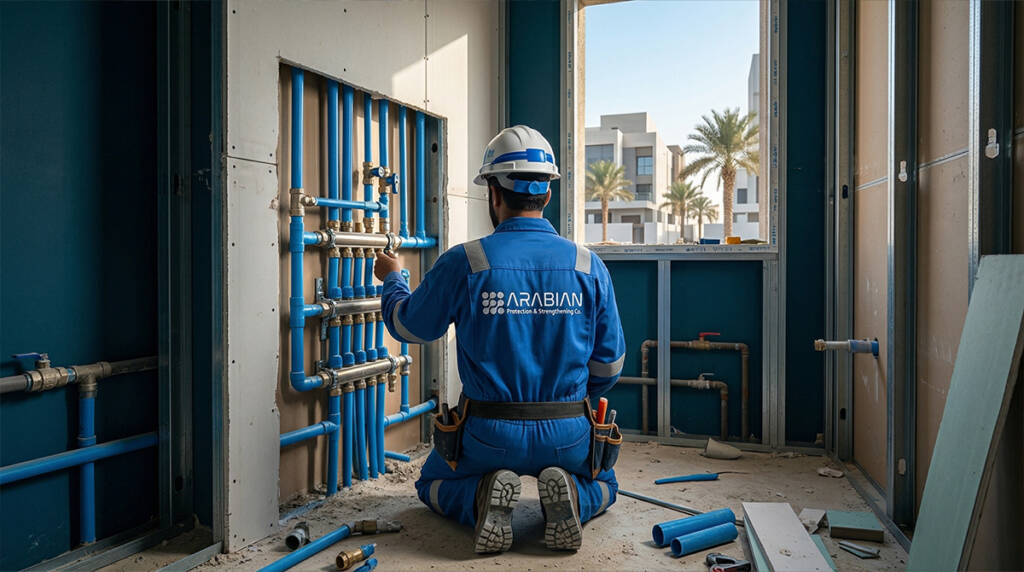
Plumbing systems deliver clean water and safely remove waste—essential to health, hygiene, and building functionality. Our potable water systems provide safe drinking water with proper sizing for adequate flow and pressure, incorporating backflow prevention devices to protect against contamination and water treatment systems where required. Sanitary drainage systems safely remove wastewater with proper slope and sizing, incorporating floor drains, grease traps for commercial kitchens, and interceptors for industrial applications. Storm drainage systems manage rainwater through roof drains, storm piping, and drainage systems that convey water away from the structure, with sump pumps where grades do not provide adequate drainage. For healthcare facilities, we install medical gas systems including oxygen, vacuum, and compressed air essential to patient care. For laboratories and industrial facilities, we provide specialized plumbing for chemical waste, process piping, and other unique applications.
Pumping Stations
Pumping stations are critical infrastructure that move water where gravity cannot. Water booster systems provide adequate pressure for high-rise buildings and facilities far from municipal mains, with variable frequency drives that adjust output to match demand while minimizing energy consumption. Sump and sewage ejector systems collect and pump wastewater from below-grade spaces, with submersible pumps and level controls that activate pumps when water reaches predetermined levels. Stormwater pumping systems protect facilities from flooding with adequate capacity for design storm events and redundant pumps to ensure operation during severe weather. Fire water pumping systems provide the pressure and flow required for fire protection, with electric or diesel-driven pumps that automatically start when system pressure drops.
Building Management Systems
Building Management Systems provide the intelligence that optimizes building performance, centralizing control and monitoring of all building systems. HVAC control monitors and adjusts heating, cooling, and ventilation equipment to maintain setpoints while optimizing energy use, with scheduling that allows systems to operate only when needed. Lighting control integrates with BMS to optimize energy through scheduling, occupancy sensing, and daylight harvesting that dims electric lighting when natural light is sufficient. Power monitoring provides visibility into energy consumption, enabling facility managers to identify opportunities for efficiency. Alarm management alerts staff to abnormal conditions—high temperatures, low pressures, equipment failures—through the BMS interface, email, or text message. Integration with security, fire alarm, and other building systems provides a unified view of facility operations, enabling coordinated response to any event.
Our Methodology
We follow a systematic approach that ensures quality, coordination, and performance. Our design and engineering phase includes load analysis to calculate electrical loads and water demand, equipment selection for efficiency and reliability, 3D coordination to resolve conflicts before construction, and energy modeling to identify efficiency opportunities. During installation, our skilled technicians execute with precision, routing conduit, piping, and ductwork to avoid conflicts and ensure access, setting equipment with careful alignment, and maintaining quality control throughout. We verify performance through comprehensive testing and commissioning—continuity testing for electrical systems, pressure testing for plumbing, functional testing for equipment, and BMS integration verification. We provide thorough handover with as-built documentation, operation and maintenance manuals, and training for facility staff to ensure long-term reliability.
