

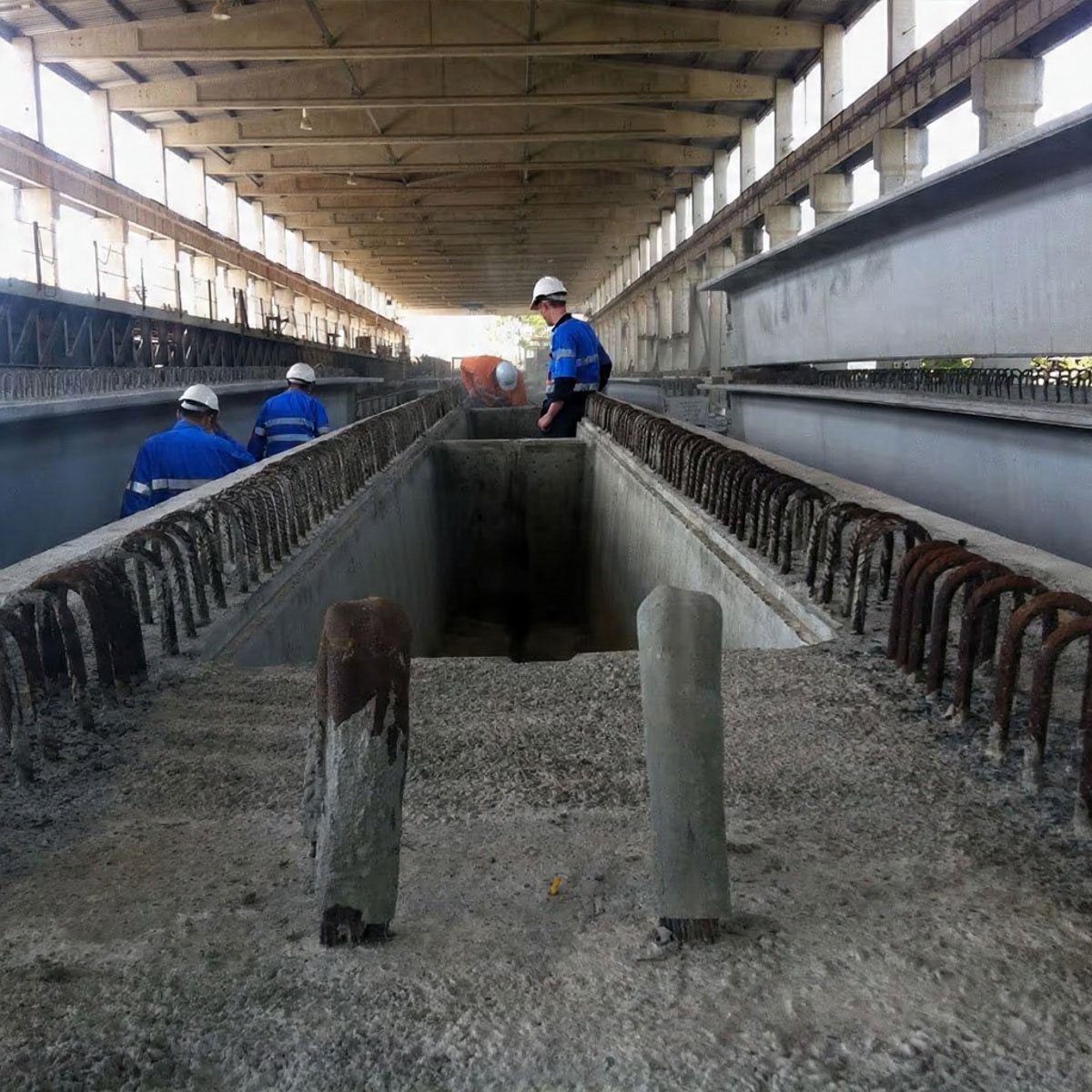
Service Overview
Before any repair, strengthening, or rehabilitation project begins, you must know the truth of your structure’s condition. Arabian Company provides authoritative structural evaluation services that deliver the clarity, confidence, and actionable intelligence needed to make critical decisions about safety, maintenance, investment, and compliance.
Our licensed engineers act as structural diagnosticians, employing a powerful combination of advanced technology, forensic analysis, and deep engineering experience to uncover not just visible symptoms, but the root causes of distress. The result is a definitive, data-driven understanding of your structure’s health—and a clear roadmap for its future.
Our Philosophy: Diagnosis Before Prescription
We believe that accurate, comprehensive evaluation is the non-negotiable foundation of all lasting protection. Our approach is guided by three core principles:
| Principle | Application |
|---|---|
| Objectivity | Our findings are based solely on evidence and engineering analysis, independent of any repair product or method |
| Thoroughness | We leave no stone unturned, combining multiple investigation techniques to build a complete picture |
| Actionability | Our reports deliver clear, prioritized recommendations—not just raw data—enabling confident decision-making |
Comprehensive Evaluation Services
| Service Type | Description |
|---|---|
| Condition Assessments & Routine Inspections | Systematic visual and instrumental examinations to document current state, establish maintenance baseline, and identify early signs of distress |
| Forensic Engineering & Failure Analysis | Determining the cause and origin of structural failures, collapses, or significant damage |
| Load Rating & Capacity Analysis | Evaluating existing structures for changes in use, new equipment loads, or compliance with updated codes | Seismic & Lateral Force Vulnerability Studies | Assessing resilience to earthquake forces or high winds, identifying weak links in the lateral load path | Pre-Purchase & Due Diligence Inspections | Unbiased, expert analysis of a property's structural condition and anticipated lifecycle costs | Structural Health Monitoring (SHM) | Installation of sensor networks for long-term, real-time monitoring of structural behavior | Material Testing & Durability Studies | Laboratory analysis of concrete, steel, masonry, and other materials to assess properties and degradation | Facade & Cladding Evaluation | Detailed inspection of building envelopes for safety, weathertightness, and anchor integrity |
